Before we can create our social media pages, there are a few things to that we need to consider first.
First of all we need to decide on our brand voice.
So… what is a Brand Voice?
A brand voice is how you want to sound to your audience. The way you word your captions, posts and even the way you speak in videos is your brand voice.
If you want your target audience to relate to your content, it is important that you can communicate with them in a way that reflects their personality.
Not sure what your brand voice should be?
Here are a 5 handy steps to figure it out:

1. Figure out what you will be posting
Are you an acoustic singer songwriter, a DnB DJ or a professional wedding band looking for work?
Your tone of voice can change how people perceive you. A Wedding Band, aiming to present themselves as professional and reliable musicians, would post pictures of themselves performing at events or photos of them in a studio session. The language they would use would be different from an upcoming DJ, who would want to relate to fans who are a part of DnB culture. Their posts may be short samples of their work, shots of their setup or photos of them performing in venues very different to that of the wedding band.
2. Who are your target audience?
For some, this can be more difficult to define as music is listened to by all sorts of people!
An example of this would be, if you are a late teens-twenties male solo pop singer, by looking at the fanbases of people like Harry Styles and Shawn Mendes, you can guess that your target audience would be majority female and mainly from the age bracket of 13-30.

My family now stands Harry forever.
But how do you figure out your target audience?
Before creating social media pages, it is understandable that you’re only going to be able to create an approximate range. Once you’ve been on social media for a while and have access to statistics and measurements (which we will talk about in a later blog post) you can narrow it down.
But to start off, look at the fanbases of other artist that are within your genre. It’s likely that they will share that target audience with you.
If you’re selling a music product, research who the type of people are who would buy your product, or something similar.
There are a few things to consider when defining your target audience. These are a few examples: Age, Sex, Location and Interests.
One thing that will make it easier for you is to start where you are. If you’re a pianist in Singapore, there’s no use marketing yourself to people in Croatia! Once you have built a fanbase where you live, then it is time to think about expanding.
3. Describe Your Ideal Follower
Who do you want to reach?
Create a table or graphic that describes your ideal fan/customer.
For example, I want to start creating electro pop music and would like to appeal to people in their twenties or late teens. I feel like the music I want to make would resonate more with people identifying as female who like a mixture of classic pop but with electronic influences. They would live in the UK, and whilst I am only just starting out, they would live in the North of the UK because if I were to perform, I’d like it to be somewhere nearby.
What would your description be? Comment yours at the end of the article!
4. Brand Voice Chart
The Content Marketing Institute talk about creating a Brand Voice Chart.
(Link to the original article- https://contentmarketinginstitute.com/2015/10/define-brand-voice/)
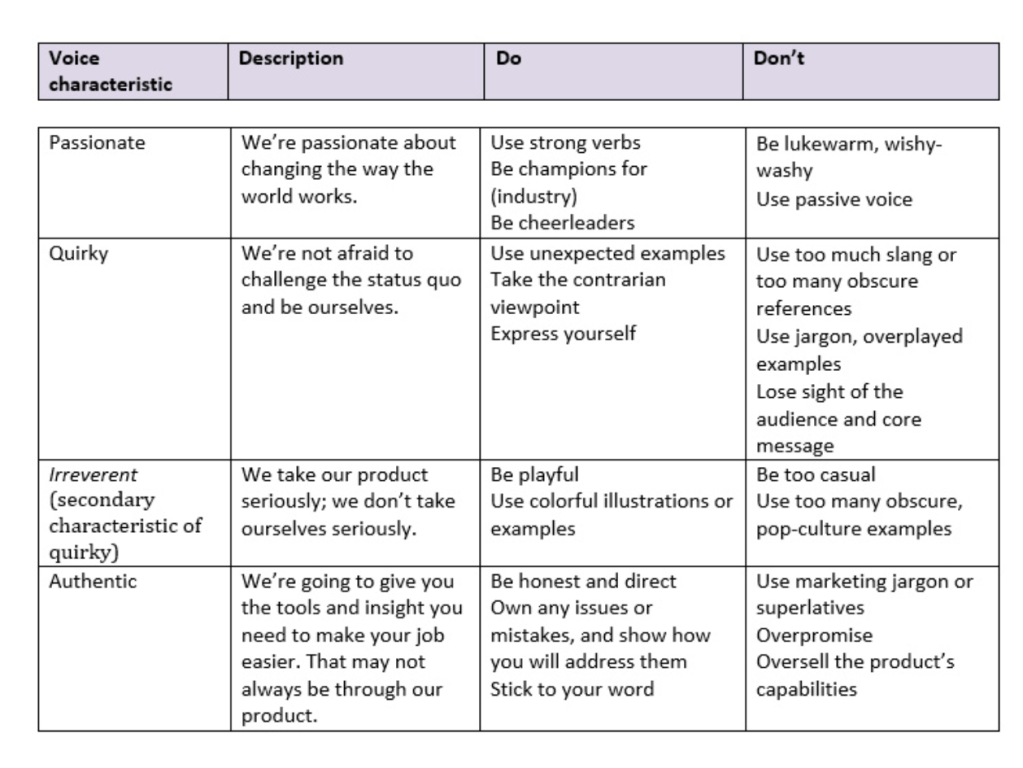
It is helpful to decide on your tone of voice.
When planning how I wanted to write these blogs, I decided I wanted to be professional and authentic (I hope I’ve achieved this!) as I want to share accurate information with you guys, but not be stuffy about it! Adding a bit of personal flair to let you know I’m a person, researching and sharing all these experiences alongside you is how I try to add authenticity.
Creating one of these charts is helpful to make sure you stay on brand when writing. In the far left column, write 3 words that could be used to describe how you want your brand voice to be.
Then, following the chart above, write a description of how the word would be used with your brand.
5. Keep On Top of it!
Once you’ve made your social media pages and have been on them for a while, you should have access to a bunch of cool statistics that tell you the Age, Sex, Location and Interests of the people who follow you. If you’ve been targeting females in their thirties but it turns out the people who interact with you the most are males in their twenties, change it up! You are never stuck with anything when it comes to social media.
So there you go! There are 5 handy tips to help you create and keep on top of your brand voice.
Did you find this article helpful? Subscribe for more like this!
Thanks!
 The Artemis Project