Sounds like Songwriting 101 right?
But when you think about it, what actually is a verse?
What does it do?
What is its purpose?
Sure we all know that a verse is a piece of music that goes before and after a chorus (or is it?), is the same each time (or is it?) and doesn’t really matter as much as the chorus (or does it?!).

What does the Verse actually do?
Songwriting is not an exact science so verses do not always provide the same thing to each song, but in a lot of songs the verses provide the exposition. Jason Blume (writer of the book ‘6 Steps to Songwriting Success’) describes the content of verses as ‘the information that will lead to the song’s hook or title.’
Essentially, its story time! A catchy verse without context is just a set of words. What the verse can do is provide this context, set the emotion/tone and put your storyline into the song.
Hallelujah! for Storytelling
One example of a song that utilises the story telling capabilities of verses beautifully is Leonard Cohen’s ‘Hallelujah’.
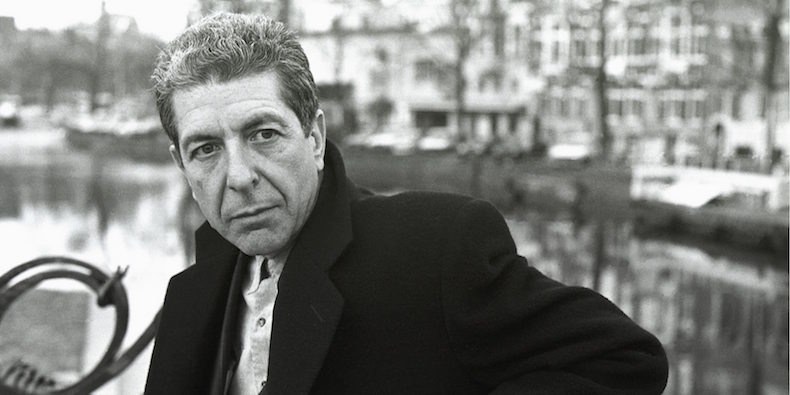
I guarantee you’d be hard-pressed to find someone who didn’t know the chorus of Hallelujah. It’s essentially just the word repeated 4 or 8 times (albeit beautifully!).
The word Hallelujah is a Hebrew word meaning ‘Praise be to God‘ and Jewish songwriter Cohen translated this into his work by referencing stories from the Torah throughout.
This can be seen in the first verse which is arguably the most well known.
Well I’ve heard there was a secret chord,
That David played and it pleased the Lord,
But you don’t really care for music, do you?
Well it goes like this:
The fourth, the fifth, the minor fall and the major lift,
The baffled king composing Hallelujah.
King David of the Jewish people (fun fact: my school was names after him!) cleansed King Saul of evil with his spiritual musicianship on the harp. You can see the references here in lines such as ‘that David played and it pleased the Lord’, which refers to this act.
And it came to pass, when the evil spirit from God was upon Saul, that David took a harp, and played with his hand: so Saul was refreshed, and was well, and the evil spirit departed from him” – 1 Samuel 16:23
Cohen also references moments like Delilah cutting Samson’s hair and robbing him of this powers (She tied you to the kitchen chair, and she broke your throne and she cut your hair) and David seeing Batsheva for the first time (You saw her bathing on the roof.)
Verse Structure
Whilst verses tend to have the most melodic and lyrical variation of a song, there are a lot of common structures that a lot of songwriters often use.
Here are a few key rules that most (but not all) verses follow:
- Verses all have the same melody each time
- Often 8-16 bars long
- Often consist of 4-8 lines of lyrics
- New lyrics per verse
- Same chord progression as previous verses
- Lyric lines have emphasis in the same parts as the other verses
(Most Pop songs that you hear on the radio follow these rules but other genres, such as Jazz, can be more fluid with their song structures.)
As well as the points above, many verses follow either an AABA (e.g. Dance Monkey- Tones and I) or ABABCB (e.g. Sorry Not Sorry- Demi Lovato) structure.
The Importance of the Verse

When you listen to a song, it is very likely that the first verse is the first thing you hear.
That means it has got the be engaging or any listeners could very easily click next.
Some methods to try out to make your verses more interesting are:
Vary your rhythms: Take influence from things like Iambic Pentameter in Poetry or try to Sing as you speak, not adapting the stressed syllables of sentences to fit a line.
Change up your structure: Maybe give AABCA or ABCBC a try?
Use external influences: Like Cohen did with stories from the Torah, mix it up a bit and write verses inspired by things you normally wouldn’t write about!
Giving it a go!
Since the aim of this project is for me to become a better songwriter, I thought I would take a page out of good ol’ Leonard’s book and write a verse that could fit into the Hallelujah structure.
This means I will:
- Keep the rhythm the same as the other verses
- Have the same number of lines
- Stick to the same melody (please imagine it! Sadly I can’t come into your home and sing it to you :P)
- Take inspiration from a story of the Torah (I’ll choose Noah’s Ark)
So here is what I came up with!
And so they came in two by two,
So less would be destroyed by you,
Your hand casting a shadow few can live in,
And while the waters fall around,
Your anger doth destroy the ground,
And from the sea they all cry Hallelujah!
Thank you for reading! Tune in for the next post where we will be breaking down the chorus.
If you enjoyed reading this or have anything to share, drop a comment down below!
Charlotte x
 The Artemis Project